
Is 1/2 inch rug pad too thick?
Sometimes, yes. And most people find out after the rug is down.
Picture this. You lay a soft new rug in the bedroom and slide a thick pad underneath. The first step feels like a cloud. Then the closet door scrapes right across the top.
A half inch sounds tiny, but it lifts everything above it. A rug pad works like a shoe insole. A little cushion feels great. Too much, and you start to wobble. What works in a bedroom may not work in a hallway or dining room.
In this guide, I’ll show you where a thick pad shines and where it causes trouble. You’ll get a simple door clearance check you can do with a tape measure. We’ll also cover floor type, rug pile height, and pad material, so you can choose with confidence.
Keep reading to see which side of the line your room falls on. A few minutes now could save you a door repair later.
Is a 1/2 Inch Rug Pad Too Thick? (Short Answer)
Not always. A 1/2 inch rug pad suits bedrooms and quiet, low-traffic rooms, under a thick rug on a hard floor. It’s usually too thick for entryways, busy walkways, thin rugs, and rugs laid over carpet.
Your exact answer depends on –
- your rug
- your floor, and
- your room.
Below, I’ll break down each case so you can match the pad to your own space.
Table of Contents
When a 1/2 Inch Rug Pad Works Well
A thicker rug pad adds more cushioning under your feet. But the right thickness depends on the room and how you use it.
Here are four situations where a 1/2-inch rug pad works well.
Bedrooms and Other Low-Traffic Rooms
Bedrooms are a good place for a 1/2-inch rug pad. You may walk barefoot in the morning or step onto the rug when getting out of bed. The extra cushioning makes the floor feel softer and more comfortable underfoot.
This thickness also suits other low-traffic areas where comfort matters. Pads in the 3/8 to 1/2-inch range are the usual choice for rooms like these. Just check the total rug height to make sure it does not block the door or create a tripping hazard.
Large Area Rugs
A 1/2-inch rug pad works well under many large area rugs, especially in living rooms where people spend time sitting or relaxing.
Choose a pad that supports the rug without making it feel unstable. Plain felt doesn’t grip, so it suits large rugs that rarely slide, especially those held in place by heavy furniture.
Check the pad’s size, too. It should sit about 1 to 2 inches inside the rug’s edge on every side, so its edges stay hidden. Very thick, high-pile rugs need a different approach, which I’ll cover next.
Hard Floors Like Hardwood, Tile, and Stone
Hard floors often feel firm underfoot, especially when you stand or walk on them for long periods.
On hardwood, a 1/2-inch pad works best in rooms where no door swings over the rug. The door clearance check later in this guide shows how to test that. Tile and stone can often handle the same thickness, even under very plush rugs. Pad material matters on every floor type, and I cover it in its own section.
Apartments and Upper Floors Where Noise Matters
A 1/2-inch rug pad softens the sound of footsteps. That helps when noise travels to the floor below. For the most quiet, use a pad that is 3/8 to 1/2 inch thick, especially in a building with many floors. Just make sure your rug can handle the extra height.
However, thickness alone does not determine noise reduction. A dense, well-made pad is also important. Keep in mind that a rug pad will not soundproof a room. It cannot block voices, music, or TV noise. If noise reduction is one of your main concerns, read my guide on whether rug pads help with noise to learn what works and what to expect.
If your room fits one of these, a 1/2-inch pad is worth a closer look.
Next, let’s see where it causes trouble.
When a 1/2 Inch Rug Pad Is Too Thick
The trouble with a 1/2 inch rug pad is height. It lifts the rug, and the edge where problems start.
Here are the places where the extra half inch does more harm than good.
Doorways and Entryways: Is a 1/2 Inch Rug Pad Too Thick for Doorways and Entryways?
Often, yes. Doorways have the least room for extra height.
A door needs room to swing. A rug and pad together add height right where the door sweeps across the floor. If that stack is taller than the gap under the door, the door drags. It can scuff the rug fibers and the bottom edge of the door. It can also make the door hard to open.
Entryways add a second problem. Thin pads suit entryways best. People step on the rug edge as they come in, and a tall edge is easy to catch with a shoe. The door clearance check below shows how to test your own doorway.
Hallway: Is a Thick Rug Pad Safe in a Hallway?
Usually not. Hallways need a low, flat edge.
Everyone in the house uses the same narrow strip. That means feet cross the rug edge again and again. A tall edge is easy to catch with a toe. Kids, older adults, and anyone carrying a load are most at risk. A lower pad keeps the edge from becoming a trip point.
Runners can be worse. They’re narrow, so both edges sit close to every step.
Thin or Flat Weave Rug: Does a Thin or Flat Weave Rug Need a Thinner Pad?
Usually, yes. A thin rug and a thin pad make a better match.
A thin rug has little body of its own, so it can’t hide a thick pad. A thicker pad under a flatweave rug can raise the edge too far and create a tripping hazard. Low-profile pads, around 1/8 inch, are made for flat-woven rugs such as kilims and dhurries.
Very Thick or High-Pile Rugs: Should You Use a 1/2 inch Rug Pad Under a shag Rug or High-Pile Rug?
Usually not. A thinner pad tends to work better.
Plush and shag rugs already bring their own cushion. Add a half inch of pad, and the rug can feel spongy and shift underfoot. For a pile of 3/4 inch or more, the common advice is a pad of about 1/4 inch or thinner. alibabar
If the rug itself is 1/2 inch thick or more, the thickest pad can create a tripping hazard. A pad that is too thick can also make the rug harder to clean and the surface uneven.
Rugs Over Carpet: Can You Use a 1/2 Inch Rug Pad Over Carpet?
Not usually. It can leave the rug unsteady.
Carpet is already soft. A soft, thick pad on carpet can make the rug float, buckle, and ripple. Two soft layers slide against each other, so the rug never sits flat. Look for a pad made for use over carpet.
Under Sofas and Chairs: Will a Thick Pad Make Sofas and Chairs Uneven?
It can, if the furniture sits only partly on the rug.
When only the front legs of a sofa or chair sit on the rug, a thick pad lifts them and makes the seat uneven. A sofa can tilt back a little, and a chair can rock.
Dining chairs have another issue. A raised edge can catch the legs as you pull the chair in and out.
If any of these sound like your room, a thinner pad is the safer pick. The comparison table ahead shows which thickness fits each case.
How to Check Door Clearance in 3 Steps
Before buying a 1/2-inch rug pad, check how much space you have under your door. You only need a tape measure and a pen. Follow these three steps.
- Measure the gap under your door. Close the door. Measure the space between the bottom edge of the door and the floor. Check a few spots along the door, since the gap can vary. A well-fitted door often has a gap of about 1/2 to 3/4 inch. But every home is different, so measure your own door.
- Add the rug and pad thickness. Measure the full thickness of the rug, including its backing. You may see the fluffy top layer called pile height. For this check, measure the whole rug. Then measure the pad. Add the two numbers.
- Compare the total with the door gap. If the total is higher than the gap, go thinner. If the total is close to the gap, leave some room to spare. atlantadesignerrugs
Example: Will a 1/2-Inch Rug Pad Fit?
Say your rug is 1/4 inch thick, and you want a 1/2-inch pad.
- Rug thickness: 1/4 inch
- Rug pad thickness: 1/2 inch
- Total height: 3/4 inch
A total of 3/4 inch is already at the limit for many doors. If your gap is 3/4 inch, there is no room to spare. If it is 5/8 inch, the stack is too tall. Switch to a 1/4-inch pad, and the total drops to 1/2 inch. That fits both doors.
A floor that is not level, a bottom seal on the door, or an outside entrance door can leave less room than you expect.
What If the Total Is Too High?
Pick a thinner pad. You can also move the rug so the door swings clear of it. As a last step, a carpenter can trim the bottom of the door.
My advice: Don’t rely only on a standard door-gap number. Measure the space under your own door and leave a little extra room if you can. This quick check can save you from buying a pad that does not fit.
Does Pad Material Change the Answer?
Yes. Thickness is only part of the story. A 1/2-inch felt pad feels different from a 1/2-inch rubber or memory foam pad. Each material has its own good and bad sides.
Felt: Soft and Plush
Felt pads are made from pressed fibers. They add cushion and keep the rug from rubbing on the floor. A 1/2-inch felt pad is a good pick when you want a soft, plush feel. Felt comes in many thicknesses and densities, which means how tightly packed the fibers are. So read the product details. Vacuum it about once a year, and blot spills so moisture does not linger.
Rubber: Strong Grip
Rubber pads are known for grip. Rubber has the best non-slip grip, so it suits busy areas and places where kids play. Felt gives the cushion. Rubber gives the hold. A felt and rubber blend is often called the best of both.
Look for 100 percent natural rubber. Fillers like sand or clay can lower quality. Check that the pad is safe for your floor, too. Synthetic rubber can damage some floors, and cheap pads can ruin the finish on wood. Follow the care steps from both the floor maker and the pad maker.
Memory Foam: Softest Feel
Memory foam feels soft and cushiony underfoot. People often pick it when comfort is the main goal. A 1/2-inch memory foam pad adds a thick, soft layer under the rug. It may also cost more than other types.
Foam can compress or squash down over time. Heavy furniture can leave dents in it. As it loses height, the rug may feel different. Foam also needs regular cleaning, since it can collect dirt and moisture.
My advice: Don’t pick a pad by thickness alone. Ask what you need most: softness, grip, or floor safety. The right material depends on your rug, your floor, and how you use the room.
The next section lines up the common thicknesses side by side.
1/2 Inch vs. Other Rug Pad Thicknesses
Most rug pads run from about 1/16 to 1/2 inch, so 1/2 inch sits at the thick end. A thinner pad keeps the rug closer to the floor. Use this table as a general guide when comparing your options.
| Pad thickness | Best use | Main consideration |
|---|---|---|
| 1/8 inch | When you need the lowest height | Least cushion |
| 1/4 inch | General everyday use | A steady middle option |
| 3/8 inch | When you want extra softness | A bit taller than 1/4 inch |
| 1/2 inch | When comfort is the top goal | Needs the most room |
These are general guidelines, not strict rules. The right thickness also depends on the pad’s construction and how much extra height your space can handle.
Which thickness should you choose if 1/2 inch is too much? Start with 1/4 inch. It is the most common size. If you want a little more softness, try 3/8 inch. source: alibaba
Best Pad Thickness by Room and Rug Type
The table below gives a quick overview of common rug pad thickness choices. These are general suggestions, not fixed rules. Your rug’s construction, floor type, and available space can affect the best choice.
| Room or rug type | Suggested thickness | Why |
|---|---|---|
| Bedroom | 3/8–1/2 inch | Comfort comes first, and traffic is low |
| Living room | 1/4–1/2 inch | Large rugs can take more height |
| Dining room | 1/8–1/4 inch | Chairs slide in and out more easily |
| Hallway | 1/8–1/4 inch | A low edge is safer to walk over |
| Entryway | 1/8 inch or thinner | A tall edge is easy to catch with a shoe |
| Rug over carpet | Thin, with a pad made for carpet | A soft, thick pad can make the rug ripple |
| Shag rug | About 1/4 inch or thinner for a pile of 3/4 inch or more | The rug already has its own cushion |
| Flatweave rug | About 1/8 inch | A thin rug can’t hide a thick pad |
Before you decide, run the door clearance check above with your own numbers.
Can You Trust the Rugpad Thickness on the Label?
Not always, so check it yourself. Some buyers of 1/2-inch felt pads say their pad was thinner than the label. Others say it was uneven from spot to spot. A few say it matched the label. This is customer feedback, not a lab test. But it is a good reason to measure.
Measure in a few spots. Check the middle and the edges, since thickness can vary across the pad.
Use the thickest number in your door check. That keeps you on the safe side.
Check the return policy before you cut. Trimming a pad to size can make it harder to send back. Measure first, then cut.
Safety Check for Kids, Pets, and Older Adults
Some people handle a raised rug less easily than others. That includes young children, older adults, and anyone who uses a walker or wheelchair. Check these three things:
- Overall height: Keep the rug and pad stack as low as you can. Accessibility rules for public buildings allow a floor height change of up to 1/4 inch with no slope, and up to 1/2 inch only if it is sloped. These rules are not made for homes. They do show how little height wheels and walkers can handle. access-board
- Curling corners: Check that all corners lie flat. Accessibility rules say carpet edges must be fastened so they do not curl. At home, a raised corner can catch feet, paws, or a cane tip.
- Pad size: Keep the pad inside the rug’s edges. A pad that sticks out adds a second edge. Use the size tip in the large area rugs section above.
Check the rug regularly to make sure it stays flat and secure. Not sure what is safe for someone in your home? Ask a doctor or an occupational therapist.
3 Best 1/2- inch Rug Pads Worth Considering
I picked these three best 1/2- inch rug pads after comparing thickness, materials, floor-safety notes, and buyer feedback. I’d still measure any pad before cutting it.
Disclosure: As an Amazon Associate, I earn from qualifying purchases. If you buy through the links below, I may earn a small commission at no extra cost to you.
1. Mohawk Home 1/2-Inch Dual Surface Rug Pad: My Top Pick for Most Rooms
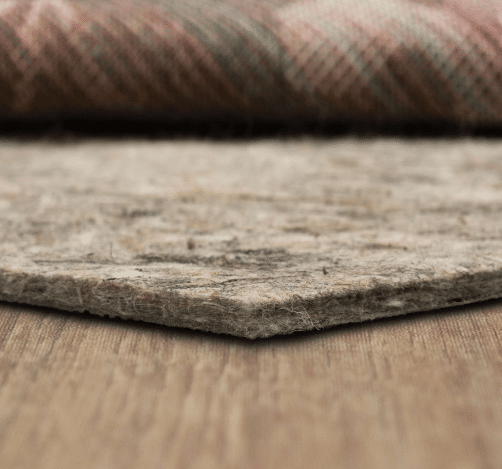
My verdict: If you want 1/2 inch of cushion and a rug that stays put, this is the one I recommend first.
Best for:
- Large rugs on hard floors, in bedrooms and living rooms
- Homes where the door gap allows the extra height
Specs:
- 1/2 inch thick
- Felt cushion with a latex rubber backing
- Trim with scissors. Mohawk suggests cutting 1/2 inch pads 2 inches short of the rug.
- Green Label Plus certified for low chemical emissions
- Made in the USA
Why I like it: Cushion and grip in one pad is the combination I’d look for. Mohawk says the latex backing grips best under rugs larger than 5′ x 8′.
What I’d watch for: It contains latex, so I’d skip it if anyone in your home is sensitive to latex. For smaller rugs and runners, Mohawk suggests adding rug tape or corner tabs. One buyer says a 2′ x 6′ size slid around, and another says a thick pad like this took two hours to cut.
2. RUGPADUSA Basics 1/2-Inch Felt Rug Pad: My Pick for Big, Heavy Rugs
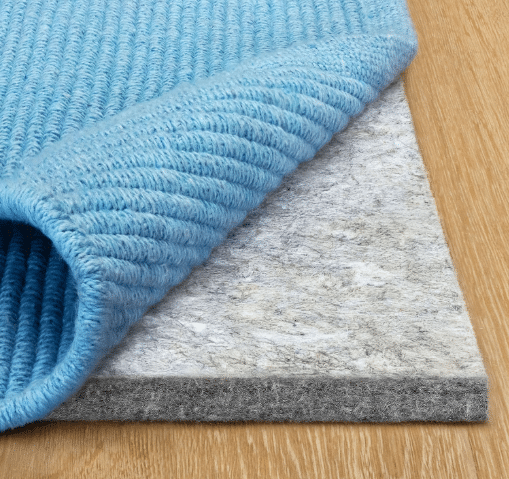
My verdict: This is pure felt cushion. I’d choose it for a large rug that won’t slide.
Best for:
- Large rugs anchored by furniture
- Spots where you don’t need grip
Specs:
- 1/2 inch thick, 100% felt
- Listed at 40 oz per square yard
- Made in the USA
- Sold as safe for all floor types, including hardwood, when the flooring maker’s instructions are followed
- Not for runners or small rugs unless heavy furniture holds them down
Why I like it: A dense, plain felt pad is a simple choice with fewer materials to worry about. One buyer says it’s fully felt, as advertised, and noticeably thickened a very thin rug. Another says it lays flat right away.
What I’d watch for: It has no grip, so I wouldn’t use it where a rug tends to slide. One buyer found it almost impossible to cut with regular scissors, so plan for a sharper tool.
3. Veken 1/2-Inch Cushioned Rug Pad: My Pick If You Prefer a Silicone Backing
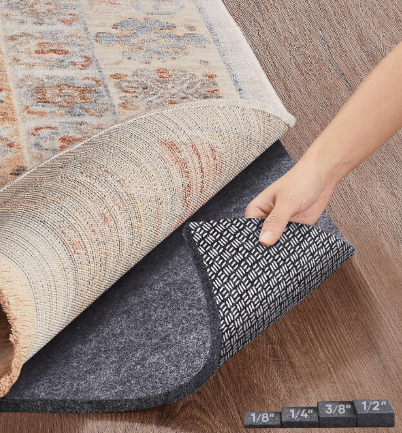
My verdict: This is another cushion-plus-grip option. I’d choose it if you want a silicone backing instead of latex rubber.
Best for:
- Hard floors where a rug tends to slide
- Anyone who wants cushion and grip in one pad
Specs:
- 1/2 inch thick (the 8′ x 10′ listing)
- Felt cushion with a silicone backing, listed as polyester and silicone
- Listed for hardwood floors and finishes
- Backing with an anti-slip strip pattern
- The same line also comes in 1/8, 1/4, and 3/8 inch
Why I like it: Grip and cushion in a single pad is what most rooms need.
What I’d watch for: I’d read the floor-safety note on the listing before using this on a finished floor.
Frequently Asked Questions About Half Inch Rug Pads
Here are quick answers to common questions about a half inch rug pad. For a rug pad thickness guide by room, see the table above.
Can I use a 1/2 inch rug pad on hardwood floors?
Yes. Choose a pad sold as safe for finished wood, and follow your flooring maker’s care steps. Check the floor now and then for marks.
Can you use a 1/2 inch rug pad under a shag rug?
It can work, but a thinner pad is usually the safer pick for a deep shag rug. Advice varies between sellers. Check your rug maker’s label first, and ask the seller if the label does not say.
Is a 1/2 inch rug pad too thick for a doorway?
Often, yes. A thick pad can run into door clearance problems fast. For a quick test, lay the rug and pad where they will sit and swing the door over them. If the door brushes the rug, go thinner.
1/4 vs 1/2 Inch Rug Pad: Which Is Better?
For most rooms, 1/4 inch. Pick a 1/2 inch pad when softness matters more than height and your door check passes. A 3/8 inch rug pad sits in between if neither fits.
Does a thicker rug pad reduce noise?
A little. Rug pad thickness helps soften footsteps and thumps, but it will not block voices or music. A rug that covers more of the floor gives the pad more to work with.
Can I use a 1/2 inch rug pad on carpet?
It is usually not the best fit. A rug pad on carpet should be thin and made for carpet, since carpet already has its own give. On Mohawk’s felt and rubber pad, the felt side goes down on carpet.
How much smaller than the rug should the pad be?
About 1 to 2 inches on each side. Mohawk suggests 2 inches for its 1/2 inch pad. A pad that pokes out past the rug can become a tripping hazard, so measure your rug first.
Can I trim a thick rug pad myself?
Yes. Mohawk says to score the surface first, then cut with scissors. Thick pads can be tough to cut, so use sharp scissors. Some makers, such as RugPadUSA, also cut pads to your size at no charge.
Final Thoughts: Is a 1/2 Inch Rug Pad Too Thick for Your Room?
A 1/2 inch rug pad is not too thick for every room. It is too thick for any room that can’t spare the height. So, measure your door gap, add up your rug and pad, and let the numbers decide.
If they don’t fit, start with 1/4-inch. If they do and you want extra softness, a 1/2 inch pad is a good choice. Then match the material to your floor.