
Which Side of Rug Pad Goes Down?

Quick Answer: On hard floors, the grippy rubber side usually goes against the floor. On carpet, the felt side goes down and the rubber side faces up toward the rug. Pad designs differ, so check your pad’s label first.

All-felt pad: The softer, fuzzier side faces down.
Dual-surface pad (felt + rubber): On hard floors, rubber side down. On carpet, felt side down.
Solid rubber or latex-backed pad: The rubber backing goes against a hard floor.
Open-pattern gripper pad (rubber or PVC): Follow the label. Many makers put the soft side down and the pattern side up.
Memory foam pad: If both sides match, either side works. If one side has a felt or rubber layer, that layer faces the floor.
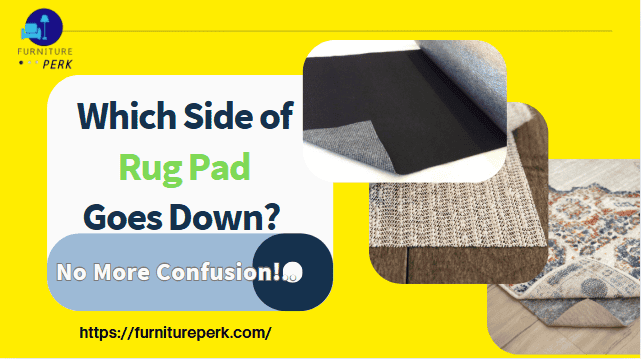
“Which side of rug pad goes down on floors?” is a common question that gets asked a lot.
You are also confused. Right?
If “YES,” you’ve come to the right place to learn about rug pads, which side down.
In this write-up, I’ll discuss this topic so that you don’t make any mistakes when installing a rug underpad.
An essential step in safeguarding your floor and rug is using a rug underpad between your floor and rug. Rug pad acts twofold. First, it protects the hardwood floor from scratches caused by the rug’s underside. Second, it protects the rug from wear and tear from daily use.
But it is important to place your rug underpad so that it faces correctly. Otherwise, it may create some minor issues and won’t perform as you’d expect it to.
Here we come.
Read on to learn how to install a rug pad and more about which side of rug pad goes up/ down.
Table of Contents
How to Install a Rug Pad Under an Area Rug & Which Side Goes Down
Before explaining which side of rug pad goes up/ down, I like to talk about how to install it.
It’s straightforward.
Follow the steps.
Step 1: Measure and trim the rug pad to the correct size.
Step 2: Clear out any items or furniture in the way of your area where you plan to install your rug with an underpad.
Step 3: Clean the area of any dirt or dust; otherwise, dirt/dust may create a spot and damage your floor.
Step 4: Decide which position of your rug best fits your room. If you have already installed an area rug, it’s better to mark the area of your rug temporarily. You can use rug tape for this purpose. Then, pull your area rug pad halfway.
Step 5: If both sides of your pad are not identical, identify its backing and the upper surface. Roll out and place your pad correctly. While placing, follow the rug pad manufacturer’s instructions. Use the marks as a guide when placing.
Step 6: Pull your half-folded area rug back.
Step 7: Repeat the process on the other end.
Step 8: Smooth out any air bubbles between the pad and rug.
Step 9: Remove the markings.
Step 10: Put your furniture back.
Which Side of Rug Pad Goes Down?- Answers & Explanations
Most of the rug underpads include directions on which side of the pad is up.
However, which side of your pad you should lay down or up depends on your flooring type and rug pad materials.
Below, I’ve listed some common types of rug pads based on materials and which way they should be placed facing the floor.
Felt: Which side of the felt rug pad goes down?
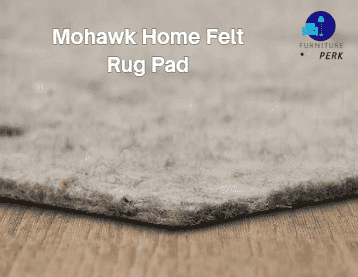
Generally, this type of pad features a soft side and a stiff side. The stiff side may scratch your hardwood surface. So, place the soft side down for the best protection of your hardwood floor or a carpeted area.
Rubber: Which side of the rubber rug pad goes down?
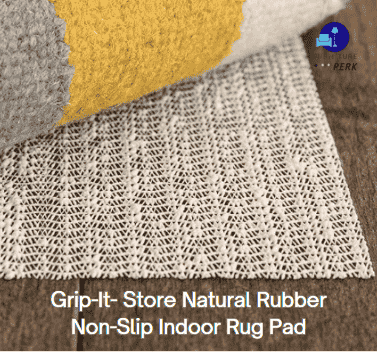
Click here to get this natural rubber pad from Amazon
Rubber pads come in two common designs, and they go down differently.
Solid or latex-backed rubber pads have a flat rubber layer, often bonded to felt. That rubber layer is the grip. On hard floors, the rubber side goes down against the floor, with the felt side up against the rug’s backing. One manufacturer’s answer on hardwood says the slip-resistant rubber backing belongs against the floor to help prevent slipping, bunching, and wrinkles.
Open-pattern gripper pads have a waffle or grid pattern on one side and a softer side on the other. Experts recommend the soft side of these goes down toward the floor, and the gripper pattern faces up to hold the rug in place.
Not sure which kind you have? Check the label or the manufacturer’s website. Don’t guess. Putting the wrong side down can leave the rug shifting, bunching, and wrinkling.
Jute: Which side of the jute rug pad goes down?
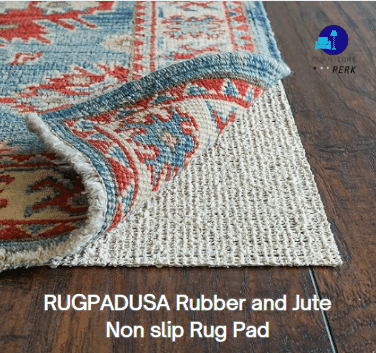
Some jute pads are identical on either side. However, other varieties feature a rubber backing. This layer prevents slipping and adds padding. So, placing the rubberized side facing down on the floor is recommended to increase the traction to prevent your rug from slipping across the hardwood floor. The other side of the jute pad will face up against your rug.
In the case of a felt jute pad, pay attention to both surfaces. Both sides of a felt jute pad are needle-punched differently. Generally, one side is flatter and firmer, and the other is softer.
The flatter side should be placed facing up to meet the bottom of the rug. The softer side should face the floor to prevent scratching. Keep in mind that the felt jute rug pad is not slip-resistant.
Rugs over carpet pad: what side of the carpet pad goes down?
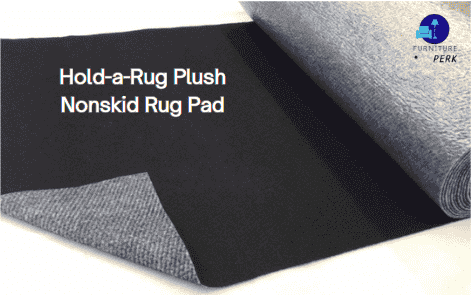
This type of pad comes with a smoother side and a slightly rough side. Which side of the rug pad goes down on the carpet?-It is a common question many people ask.
Well, the rough side of the pad will go up facing the bottom of your area rug. As a result, it’ll help to hold your rug in place on top of the carpet. The softer side of the pad will face the floor or wall-to-wall carpet.
PVC: Which side of the PVC rug pad goes down?
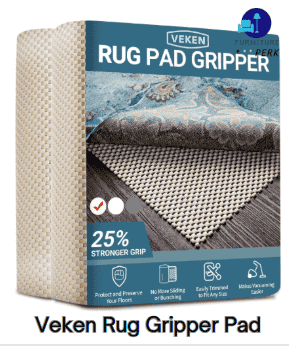
PVC pads are usually the open-pattern gripper type. Experts advice is to find the soft side and the pattern side, then lay the pad with the soft side down and the pattern side up.
Some brands do it the other way around. Ruggable’s instructions, for example, tell you to lay its pad with the grippy, rubbery side down. That’s why the label on your pad beats any general rule, including this one.
Memory foam: Which side of memory foam rug pad goes down?
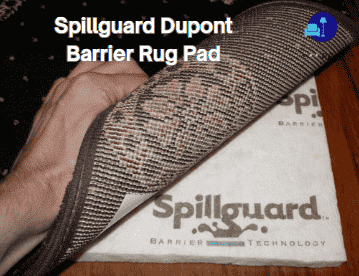
If your pad is constructed of memory foam all the way, simply place it in any way you like. Because both sides of the pad are identical, there is no specific up or down side. But you’ll also find some memory foam under the pad with a rubber or felt layer on one side that indicates the underside of the pad. In this case, place the rubber or felt backing towards the floor.
Which Side Goes Down on Rug Pad for Hardwood Floors?
Choosing the right side of your rug pad to face down is more important than it sounds—especially if you have hardwood floors. Putting the wrong side down can lead to slipping, floor damage, or a lumpy rug. Here’s how to know which side goes where:
- Grip side down: On most hard-floor pads, the rubber or latex side goes against the floor. It feels textured or tacky, and it keeps the rug from sliding. Most pads made for hard floors work this way.
- Cushion or felt side up: The softer felt or foam layer faces the rug and adds comfort.
- Open-pattern gripper pads: These can be the exception. Follow the manufacturer’s label.
- Double-sided pads: Check the label. Dual-surface pads are made to go felt-side down on carpet and rubber-side down on hard surfaces.
👉 Quick Tip: Always test a small spot first, especially on hardwood floors. Some low-quality pads can stick or stain over time.
Final Words
I hope this discussion has provided you with the explanation and the right guidelines to install a rug pad.
Buy the right rug pad for your floor type and place it correctly.
Cheers!