
Have you ever asked yourself, “Do you need a rug pad under the bed?” I did too when I bought my first bedroom rug. Since my bed was heavy, I thought it would keep the rug in place. I figured I could save money by skipping the rug pad. Later, I found out that it wasn’t always the best choice.
A rug pad under a bed does more than hold your area rug in place. It helps protect your floor, makes the rug feel softer, and can help it last longer. But not every bedroom needs one. The right answer depends on your floor, your rug, and how you place it.
In this guide, I’ll show you when you should use a bedroom rug pad and when you can skip it. I’ll also explain which rug pad works best for different floors and bed setups. By the end, you’ll know exactly what is right for your bedroom.
Quick Answer
Yes. Most bedrooms need a rug pad under the bed, especially if the rug is on hardwood, laminate, vinyl, or tile flooring. A good rug pad helps keep the rug from moving, protects your floor from scratches, adds a little extra comfort, reduces noise, and helps your rug last longer.
You may not need a rug pad if your rug is fully under a heavy bed with only a small part showing. You may also skip it if the rug sits on wall-to-wall carpet in a room that doesn’t get much foot traffic. Even then, some people still use a rug pad for extra comfort and floor protection.
At a Glance
| Situation | Need a Rug Pad? |
|---|---|
| Hardwood floor | ✅ Yes |
| Laminate floor | ✅ Yes |
| Vinyl floor | ✅ Yes |
| Tile floor | ✅ Yes |
| Rug extends beyond the bed | ✅ Yes |
| Kids or pets at home | ✅ Yes |
| Wall-to-wall carpet | ⚪ Usually No |
| Rug fully under a heavy bed | ⚪ Sometimes |
Why This Question Isn’t as Simple as It Sounds
The answer is not the same for every bedroom. A rug under a king-size bed on hardwood may need a rug pad. The same rug on carpet may not. It also matters how much of the rug sticks out from under the bed.
That’s why you may find different answers online. In this guide, I’ll explain what really matters. We’ll look at your floor type, rug placement, bed style, and daily use. That way, you can choose the best option for your bedroom with confidence.
What Does a Rug Pad Do Under a Bed?
A rug pad under the bed does more than keep your rug in place. After using one in my own bedroom, I noticed several small changes that made a big difference. Here are the main ways a rug pad helps.
Keeps the Rug from Sliding
The part of the rug that sticks out from under the bed can move as you walk on it. Kids and pets can make it shift even more. A non-slip rug pad helps keep those edges flat and steady, making your rug safer to walk on.
Protects Hardwood and Other Floors
Small bits of dirt can get trapped under a rug. As you walk across it, those tiny particles can rub against the floor and leave scratches. A rug pad adds a protective layer that helps reduce everyday wear on hardwood, laminate, vinyl, and tile floors.
Makes Walking More Comfortable
One of the first things I noticed was how much softer the rug felt under my feet. A rug pad adds a little cushion, making those first steps out of bed more comfortable. It’s a simple upgrade that you can feel every day.
Helps Your Rug Last Longer
Walking on a rug every day puts stress on its backing and fibers. A rug pad helps spread out that pressure, so the rug wears more evenly. In my experience, rugs with a pad underneath stay in better shape over time.
Reduces Noise and Vibration
A rug pad can also make your bedroom a little quieter. It helps soften the sound of footsteps and absorbs small vibrations. I noticed the biggest difference in an upstairs bedroom with hardwood floors. If noise is a concern in your home, I explain this in more detail in my guide on Do Rug Pads Help With Noise?, where I compare different rug pad materials and how well they reduce sound.
Do You Really Need a Rug Pad Under the Bed?
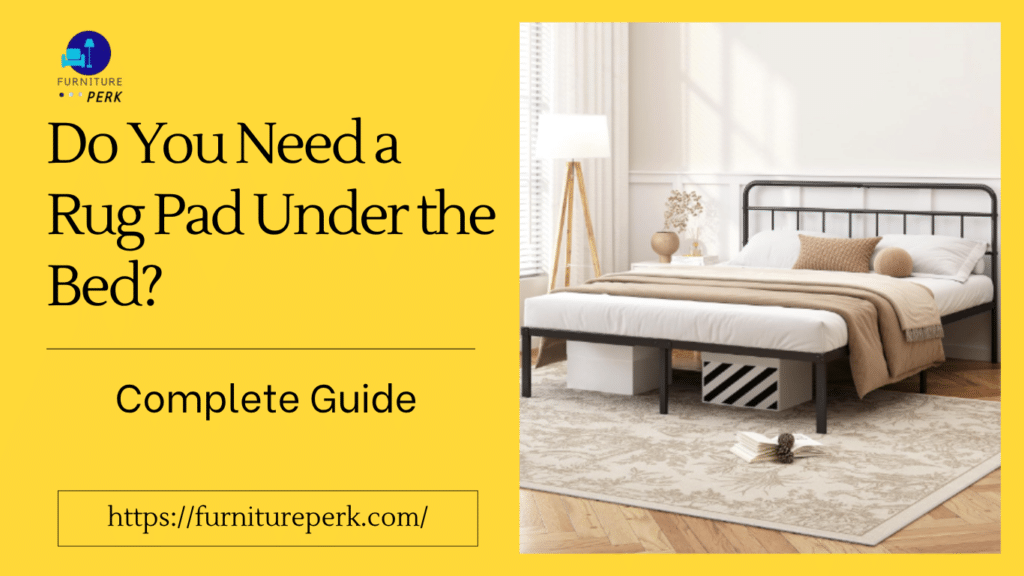
The answer depends on your bedroom. A rug pad is helpful in many homes, but it isn’t the right choice for every setup. Things like your floor type, rug placement, and how you use the room all matter.
For example, a rug that sticks out around the bed often needs a rug pad. But if the rug is almost completely under a heavy bed, you may be able to skip it. The same rug can need a different answer in another room.
I also think about who uses the bedroom. A quiet guest room has different needs than a busy family bedroom with kids or pets. That’s why there isn’t one answer that fits every home.
In the next few sections, I’ll walk through each situation step by step. By the end, you’ll know if a rug pad under the bed is the right choice for your bedroom.
When You Should Definitely Use a Rug Pad
While every bedroom is different, I’ve found that some situations almost always call for a rug pad under the bed. If your bedroom matches any of the examples below, I recommend adding one.
Hardwood Floors
Hardwood floors are one of the best reasons to use a rug pad. They are beautiful, but they can show wear over time. If your bedroom has hardwood flooring, I wouldn’t place an area rug directly on the floor for years without a rug pad underneath.
Laminate, Tile, and Vinyl Floors
These hard floors also benefit from a rug pad. They have smooth surfaces, and bedroom rugs often sit better with extra support underneath. In my experience, a rug pad is a smart choice for laminate, tile, and vinyl flooring.
Large Bedroom Rugs
Large rugs can be heavy and difficult to adjust once the bed is in place. I like to install a rug pad before setting everything up. It helps keep the rug looking neat without having to move heavy furniture later.
Busy Bedrooms
Think about how often people walk through the room. A main bedroom used every day needs different care than a guest room used only occasionally. The more you use the room, the more helpful a rug pad becomes.
Kids’ Rooms
Children love to play, jump, and move around the room. I’ve found that a rug pad is a good choice in kids’ bedrooms because it helps the rug stay flat during everyday play.
Pet-Friendly Homes
Dogs and cats don’t always walk slowly across a rug. They run, chase toys, and sometimes slide when they stop. If you share your home with pets, a rug pad can help your bedroom rug stay in place during all that activity.
Expensive Rugs
If you’ve spent good money on a quality wool rug, Persian rug, or another premium area rug, it makes sense to give it extra support. I see a rug pad as a small investment that helps protect a much bigger one.
Delicate Flooring
Some floors need a little extra care. If your bedroom has delicate wood flooring or a surface that can mark easily, I recommend checking that your rug pad is safe for that floor type. Using the right pad from the start can help you avoid problems later.
When You Can Skip the Rug Pad
A rug pad under the bed isn’t always necessary. In some bedrooms, you can skip it without causing problems. The key is knowing the trade-offs before you decide.
The Rug Is Completely Under the Bed
If almost the entire area rug sits under a heavy bed and only a few inches show around the edges, you may not need a rug pad. The bed does most of the work by holding the rug in place. Just remember that moving the bed later may take a little more effort if the rug has shifted over time.
It’s a Guest Room
A guest room usually gets much less use than a main bedroom. If people only stay there a few nights each year, a rug pad may not be worth the extra cost. I still check the rug from time to time to make sure it stays flat and looks neat.
The Rug Is on Wall-to-Wall Carpet
An area rug placed on carpet often stays in place better than one on a hard floor. In many cases, you can skip the rug pad. However, if the rug wrinkles or bunches up, you may want a rug pad made for use on carpet.
The Rug Is Only There for a Short Time
Sometimes you place a rug in a bedroom while decorating, moving, or waiting for new furniture. If the rug will only stay there for a few weeks, I usually don’t bother with a rug pad. Once the room is finished, it’s easier to decide if you really need one.
The Rug Is Just for Decoration
Some rugs are there to complete the look of a room, not to be walked on every day. If your rug sits in a corner or under furniture and gets very little use, you may be able to skip the rug pad. Just make sure the rug stays flat and doesn’t become a tripping hazard.
Think About the Trade-Offs
Skipping a rug pad can save money, but it isn’t always the best long-term choice. Before you decide, think about how often you use the room and whether your bedroom setup might change in the future. I find it’s easier to choose based on how you live today, not just how the room looks right now.
Does a Heavy Bed Keep the Rug in Place?
A heavy bed can help hold down the part of the rug that sits underneath it. But that doesn’t always mean you can skip a rug pad under the bed. The type of bed also affects how much support the rug gets.
Platform Bed- Does a platform bed need a rug pad?
A platform bed has a wide base that presses on more of the rug than most other beds. This gives the rug more support. Even so, I still think about the floor type and how much of the rug is exposed before skipping the rug pad.
King Bed- Do I need a rug pad under a king bed?
A king bed is heavy, but weight alone isn’t the deciding factor. If a large part of the rug extends beyond the bed, I still recommend looking at the whole setup instead of relying on the bed’s weight.
Storage Bed- Should I use a rug pad under a storage bed?
Storage beds are usually very heavy because of the built-in drawers. If you open those drawers every day, I prefer using a thin rug pad so the rug stays smooth without getting in the way.
Adjustable Bed- Does an adjustable bed hold a rug in place?
An adjustable bed moves often. A thick rug pad may not be the best choice because it can reduce the space around the moving parts. If you need a rug pad, I recommend choosing a low-profile one.
Four-Poster Bed
A four-poster bed puts most of its weight on four legs instead of a solid base. That means less of the rug is held down. In many cases, a rug pad is still a good idea.
Metal Bed Frame
Most metal bed frames also rest on a few legs. They don’t press on as much of the rug as a platform bed does. If your rug extends around the bed, I wouldn’t rely on the frame alone.
My Advice
I’ve learned that a heavy bed can help, but it doesn’t always replace a rug pad. I look at the bed type, floor type, rug placement, and daily use before making a decision. That gives me a much clearer answer than focusing on weight alone.
Does the Way Your Rug Is Placed Change Whether You Need a Rug Pad?
Yes. In my experience, rug placement is just as important as the floor type. The same area rug may need a rug pad in one layout but not in another. That’s why I always look at where the rug sits before making a decision.
Entire Rug Under the Bed
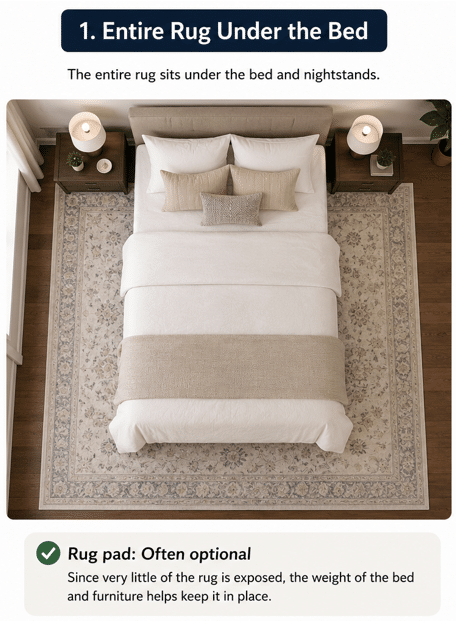
When the entire rug sits under the bed, very little of it is exposed. This layout often works without a rug pad, especially in a quiet bedroom. I still check the rug every few months to make sure it stays flat and centred.
Two-Thirds Under the Bed
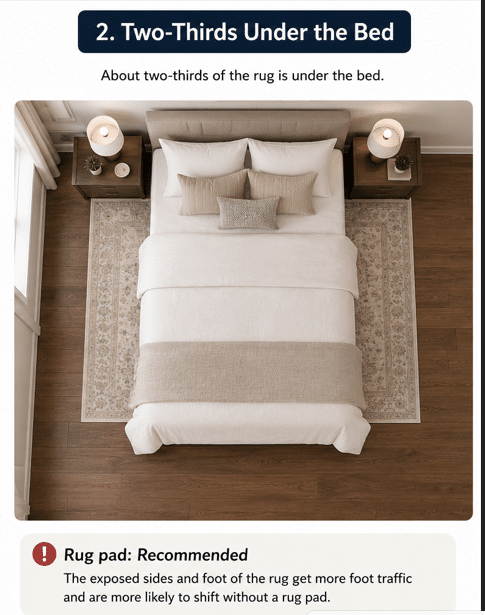
This is one of the most common bedroom layouts. The rug extends beyond the sides and foot of the bed, so those areas get used every day. In this setup, I usually recommend a rug pad under the bed, especially on hard floors.
Rug Only at the Foot of the Bed
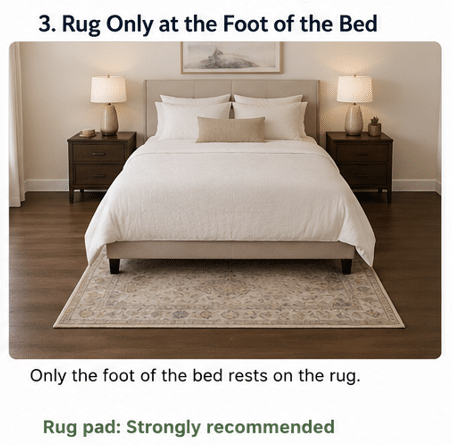
Some people place a rug only at the foot of the bed to add color and comfort. Since the rug is not held down by the bed, I almost always use a rug pad. It helps the rug stay where I put it.
Two Runners Beside the Bed
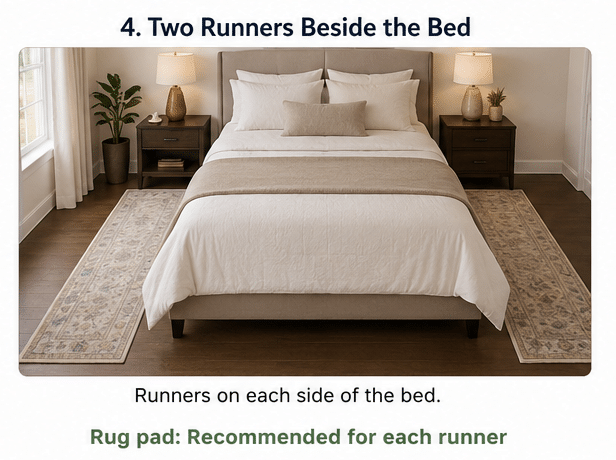
Bedroom runners are a great choice in narrow spaces. Because they are long and narrow, they can move more easily than large rugs. I prefer using a rug pad under each runner to keep them neat and secure.
Small Accent Rug Beside the Bed
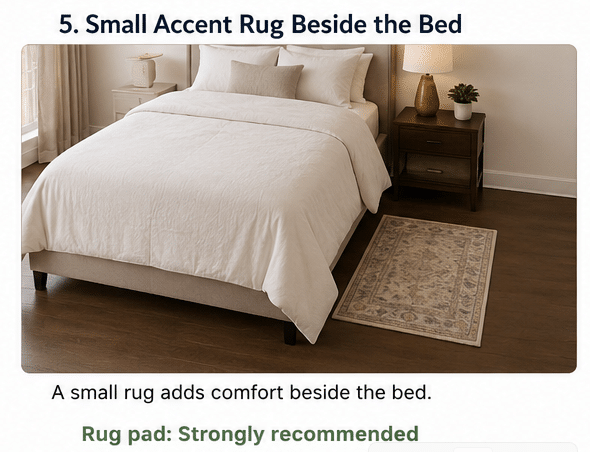
A small rug beside the bed is perfect for soft first steps in the morning. Since it isn’t anchored by furniture, it depends more on a rug pad for support. In my experience, this is one of the layouts where a rug pad makes the biggest difference.
My Advice
When people ask me, “Do you need a rug pad under the bed?”, I don’t answer by looking at the bed first. I look at how the rug is placed. Once you know the layout, choosing whether to use a rug pad becomes much easier.
Do You Need a Rug Pad Based on Your Floor Type?
Your floor type is one of the first things I look at before choosing a rug pad. The same rug pad under the bed doesn’t work well on every floor. Picking the right material can help your rug perform better and protect your flooring.
Here’s a quick guide.
| Floor Type | Need a Rug Pad? | Best Rug Pad |
|---|---|---|
| Hardwood | ✅ Yes | Felt + Rubber |
| Tile | ✅ Yes | Rubber |
| Laminate | ✅ Yes | Felt + Rubber |
| Vinyl | ✅ Yes | Felt* |
| Carpet | ⚪ Optional | Felt |
*Note: If you have vinyl flooring, choose a rug pad that says safe for vinyl floors.
Hardwood
I use a felt and rubber rug pad on hardwood floors. The felt adds comfort, and the rubber helps keep the rug steady. It is a good choice for most bedrooms.
Tile
Tile floors are hard and smooth. I like a rubber rug pad because it helps the rug stay where it belongs. It also feels better when I step out of bed. Need help choosing one? Read my guide to the best rug pads for tile floors.
Laminate
For laminate flooring, I also recommend a felt and rubber rug pad. It gives a nice mix of support and grip. Just make sure the pad is made for laminate floors. If you need help choosing one, read my guide to the best rug pads for laminate floors.
Vinyl
Vinyl flooring needs a little extra care. Some rubber rug pads can damage vinyl over time. I always choose a felt rug pad or one that says it is safe for vinyl. If you’re looking for the right option, check out my guide to the best rug pads for vinyl plank flooring.
Carpet
If your rug is on wall-to-wall carpet, you may not need a rug pad. If I decide to use one, I pick a felt pad because it adds support without making the rug too thick.
My Advice
If you’re not sure which rug pad to buy, start with your floor type. It makes the choice much easier. A rug pad that matches your flooring will usually give you the best results.
Which Rug Pad Is Best for a Bedroom?
Not all rug pads are the same. After trying different types over the years, I found that each one works best in a different situation. The best rug pad under the bed depends on your floor, your rug, and how you use your bedroom.
Felt Rug Pads
Felt rug pads are soft and comfortable. They add a little cushion, which feels nice when you get out of bed. I like them for large rugs or rugs that are already held in place by heavy furniture.
Pros
- Soft and comfortable
- Adds extra cushion
- Works well under large rugs
Cons
- Doesn’t provide much grip on smooth floors
- Not the best choice if the rug moves easily
Rubber Rug Pads
Rubber rug pads are made to add grip. They help keep rugs steady on hard floors. I use them when keeping the rug in place is my top priority.
Pros
- Excellent grip
- Thin and easy to hide
- Great for hard floors
Cons
- Adds very little cushion
- Some rubber pads are not safe for vinyl floors
Felt + Rubber Pads
This is my favorite choice for most bedrooms. The felt gives you comfort, while the rubber adds grip. It offers a good balance of support and stability.
Pros
- Combines comfort and grip
- Works well on most hard floors
- A great all-around choice
Cons
- Costs a little more than basic rug pads
- Can be thicker than some people want
Memory Foam Pads
Memory foam rug pads feel soft under your feet. They make your first steps in the morning more comfortable. I like them in bedrooms where comfort matters more than grip.
Pros
- Very soft and comfortable
- Adds extra cushioning
- Makes the room feel warmer
Cons
- Usually thicker than other rug pads
- May not work well under adjustable beds or low-clearance furniture
Natural Rubber vs. PVC
If you are choosing a rubber rug pad, check what it is made from. I prefer natural rubber because it is more durable and is usually safer for many floor types. PVC rug pads often cost less, but they may wear out faster and are not the best choice for every floor.
| Material | Best Thing About It | Keep in Mind |
|---|---|---|
| Natural Rubber | Strong grip and long life | Usually costs more |
| PVC | Lower price | May not be safe for all floors |
My Recommendation
If someone asks me “which rug pad under the bed I would buy”, I usually recommend a felt and rubber rug pad. It gives me the best mix of comfort and support for most bedrooms. If you have a special floor, like vinyl, always check that the rug pad is labelled as safe for that surface before you buy it.
How Thick Should a Rug Pad Be Under a Bed?
The right thickness can make a big difference. I don’t always choose the thickest rug pad under the bed. Instead, I think about the rug, the bed, and how the bedroom is used.
Here’s a quick guide to help you choose.
| Thickness | Best For |
|---|---|
| 1/8 inch | Thin rugs, adjustable beds, low-clearance furniture |
| 1/4 inch | Most bedrooms and area rugs |
| 3/8 inch | Bedrooms where you want extra comfort |
| 1/2 inch | Thick rugs and luxury bedrooms |
1/8-Inch Rug Pad
A 1/8-inch rug pad is thin but useful. I like it under adjustable beds or furniture with little space underneath. It adds support without raising the rug very much.
1/4-Inch Rug Pad
A 1/4-inch rug pad is my top choice for most bedrooms. It gives a nice mix of comfort and support. If you’re not sure which thickness to buy, this is usually a safe option.
3/8-Inch Rug Pad
A 3/8-inch rug pad feels softer under your feet. I like it in a main bedroom where comfort matters. It gives the rug a fuller feel without being too thick.
1/2-Inch Rug Pad
A 1/2-inch rug pad offers the most cushion. I use it with thick area rugs in bedrooms where comfort is the main goal. Before buying one, I always check that the bed and doors still have enough clearance.
Which Thickness Should You Choose?
The best thickness depends on how you use the room.
| Bedroom Type | Recommended Thickness |
|---|---|
| Guest bedroom | 1/8 inch |
| Standard bedroom | 1/4 inch |
| Main bedroom | 3/8 inch |
| Luxury bedroom with a thick rug | 1/2 inch |
| Bedroom with an adjustable bed | 1/8 inch |
My Recommendation
If I could choose only one thickness, I would pick a 1/4-inch rug pad. It works well in most bedrooms and fits under most beds without any problems. If comfort is your top priority, moving up to 3/8 inch is often worth it.
Do You Need a Rug Pad Under the Bed in These Special Situations?
The answer isn’t always the same. In my experience, your daily routine can be just as important as your floor type or bed setup. Here are a few situations where I think more carefully before deciding whether to use a rug pad under the bed.
If You Have Kids
If your kids play in the bedroom, I recommend using a rug pad under the bed. Children often sit, crawl, or play on the part of the rug that extends beyond the bed. A rug pad helps keep the rug flatter and more comfortable for everyday use.
If You Have Dogs
Dogs love to jump on and off the bed. They may also run across the bedroom when they play. In homes with dogs, I usually choose a rug pad under the bed because it helps the rug stay in good shape with daily activity.
If You Have Cats
Cats often sleep, play, or scratch on bedroom rugs. If your cat spends a lot of time around the bed, a rug pad is a good idea. It helps support the rug during everyday use and keeps it lying flat.
If You Use a Robot Vacuum
A robot vacuum works best when the bedroom rug stays flat. I learned this after my robot vacuum kept stopping at the edge of my rug. A rug pad under the bed can help the vacuum move more smoothly around the room.
If You Live in a Humid Climate
In humid areas, rugs can hold more moisture than you might expect. I like using a breathable rug pad under the bed because it allows better airflow beneath the rug. I also lift the rug from time to time to let both the rug and the floor dry completely.
If You Have Radiant Heated Floors
Not every rug pad is made for heated floors. Before buying one, I always check that it is safe for radiant heat. This helps the floor warm the room as it should while protecting both the rug and the flooring.
If You Rent Your Home
If you rent your home, a rug pad under the bed can be a smart investment. It adds an extra layer between the rug and the floor, which may help reduce everyday wear. That can make it easier to leave the flooring in good condition when you move.
My Advice
Small details can make a big difference. If your bedroom has kids, pets, a robot vacuum, heated floors, or high humidity, don’t overlook them. These everyday factors can help you choose the right rug pad for your bedroom.
Common Mistakes to Avoid With a Rug Pad Under the Bed
Choosing the right rug pad under the bed is only part of the job. It also needs to be the right size, thickness, and material for your bedroom. I’ve made some of these mistakes myself, so I know how easy they are to miss.
Buying the Wrong Size Rug Pad
A rug pad should be slightly smaller than the bedroom rug. I leave about 1 inch of space on each side. This keeps the rug pad hidden and helps the rug lie flat around the bed.
Using a Rug Pad That’s Too Thick
A thicker rug pad is not always better. If it is too thick, it can make the rug sit higher than needed. This may become a problem with storage beds, adjustable beds, or furniture that sits close to the floor.
Letting the Rug Pad Show Around the Rug
A rug pad should stay out of sight. If it sticks out around the sides or foot of the bed, it can make the whole setup look unfinished. I always check the edges after placing the rug.
Using the Wrong Rug Pad on Vinyl Flooring
If your bedroom has vinyl flooring, choose the rug pad carefully. Some rubber rug pads can react with vinyl and leave stains over time. I always buy a rug pad that is clearly labeled as safe for vinyl floors.
Not Trimming the Rug Pad
Sometimes a rug pad is a little too large for the rug. Instead of folding the extra material underneath, I trim it with scissors. A properly sized rug pad works better and stays hidden.
Choosing the Wrong Material
Not every rug pad is made for the same job. Before I buy one, I think about my bedroom floor and how the rug is placed under the bed. Matching the right material to your setup helps the rug perform better.
Using a Rug Pad Under a Rug That’s Too Small
A rug pad cannot fix a rug that is too small for the bed. If the rug does not extend far enough around the bed, the room may still feel unbalanced. I always choose the right rug size first and then add the right rug pad.
My Advice
A rug pad under the bed works best when every part of the setup fits together. The right size, material, and thickness all matter. Avoiding these simple mistakes will help your bedroom rug look better, feel better, and last longer.
Is a Rug Pad Under the Bed Worth the Money?
Many people ask if a rug pad under the bed is worth the cost. I wondered the same thing when I bought my first bedroom rug. At first, I thought I could save money by skipping the rug pad. Later, I realized it can help protect things that cost much more.
Here’s a simple comparison.
| Item | Typical Cost | How Long It Lasts |
|---|---|---|
| Quality rug pad | $30–$100 | 5–15 years |
| Bedroom area rug | $200–$2,000+ | Varies |
| Hardwood floor repair | Hundreds to thousands of dollars | One-time repair |
Prices can change based on the brand, size, and where you live.
A Small Cost Can Save You Money
A good rug pad costs much less than a new rug. If it helps your bedroom rug last longer, it can save you money over time. That’s why I see it as an investment instead of an extra expense.
Think About What You’re Protecting
Many bedroom rugs and hardwood floors cost a lot of money. A rug pad is one of the least expensive parts of the setup. For me, spending a little now makes more sense than paying for a new rug or floor repair later.
Buy the Right Rug Pad, Not the Most Expensive One
You don’t have to buy the most expensive rug pad. I always choose one that matches my floor, rug, and bedroom. The right rug pad will usually work better than the most costly one.
My Recommendation
If you use an area rug in your bedroom, I think a rug pad under the bed is worth the money in most cases. It is a small purchase that can help protect much bigger investments. Choosing the right rug pad today may save you money in the future.
So, Should You Use a Rug Pad Under the Bed?
After trying different bedroom rugs and rug pads over the years, my answer is yes for most bedrooms. If your rug is on hardwood, laminate, tile, or vinyl flooring, I think a rug pad is a smart choice. The same is true if part of the rug extends beyond the bed or your bedroom gets daily use.
That doesn’t mean everyone needs one. If your rug is fully under a heavy bed, sits on wall-to-wall carpet, or is only used for decoration, you may be fine without a rug pad. Every bedroom is a little different, so I always look at the whole setup before deciding.
If you’re still unsure, I suggest choosing a felt and rubber rug pad for most hard floors. It works well in many bedrooms and gives a good balance of support and grip. In my experience, it’s the option that suits most people.
My final advice is simple: don’t buy a rug pad just because everyone else does. Buy one because it fits your bedroom, your floor, and your rug. When you choose the right rug pad for your setup, it’s a small upgrade that can make your bedroom work better for years.
Frequently Asked Questions
Can a rug pad damage hardwood floors?
No, a quality rug pad should not damage hardwood floors. The key is choosing one that is made for hardwood. I always check the product label before buying to make sure it is safe for my floor.
How long does a rug pad last?
Most quality rug pads last 5 to 15 years. The lifespan depends on the material, how often the room is used, and how well you care for it. If the pad becomes flat, brittle, or starts to break apart, it’s time to replace it.
Can mold grow under a rug pad?
Yes, it can happen if moisture gets trapped under the rug for a long time. This is more common in humid areas or damp rooms. I lift my bedroom rug every few months to let both the rug and the floor air out.
Can I cut a rug pad to fit my rug?
Yes. In fact, many rug pads are made to be trimmed. I use a pair of sharp scissors and leave about 1 inch of space between the edge of the rug pad and the edge of the rug.
Can I wash a rug pad?
Most rug pads should not be washed in a washing machine. Instead, I vacuum them or wipe them with a damp cloth if they get dusty. Always follow the cleaning instructions from the manufacturer.
How often should I clean under my bedroom rug?
I like to lift my bedroom rug and clean underneath it every three to six months. If you have pets, kids, or allergies, cleaning more often is a good idea.
Can robot vacuums clean rugs with a rug pad?
Yes. A rug pad can actually help a robot vacuum work better by keeping the rug flatter. Just make sure the rug edges stay flat so the vacuum can move over them easily.
When should I replace a rug pad?
Replace your rug pad if it starts to crumble, lose its shape, or no longer supports the rug. A worn-out rug pad cannot do its job as well as a new one.
Can I use two rug pads together?
I don’t recommend it in most bedrooms. Stacking two rug pads can make the rug sit too high and may affect how it lies under the bed. It is usually better to buy one rug pad with the right thickness.
Should a rug pad cover the whole rug?
No. A rug pad should be slightly smaller than the rug. Leaving about 1 inch of space around the edges helps keep the rug pad hidden.
Do rug pads leave marks on floors?
A good-quality rug pad made for your floor type should not leave marks. Problems usually happen when the wrong material is used, especially on vinyl flooring. That’s why I always match the rug pad to the floor.
Can I reuse a rug pad after moving?
Yes, if it is still in good condition and fits your new rug. Before reusing it, I check for cracks, wear, or damage. If the rug pad is old or doesn’t fit well, replacing it is often the better choice.