
You pull back the rug to vacuum. The floor looks fine, except for one spot. A pale yellow rectangle sits right where the rug pad used to be.
So why rug pads leave yellow stains on hardwood floors? And is the damage permanent?
The answer depends on the pad, your floor’s finish, and what’s on the back of your rug. Sometimes the pad isn’t the culprit at all.
Hold off on scrubbing for now, because the culprit isn’t always the one you’d expect.
A few five-minute checks can show you what you’re dealing with. Then you can repair the stain and choose a pad that’s safe for your hardwood finish.
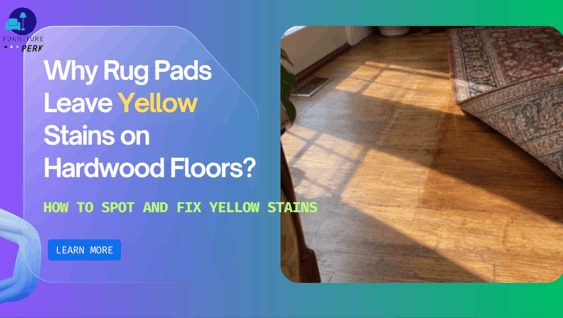
Table of Contents
What Causes Yellow Stains Under a Rug Pad?
Yellow stains can form when chemicals in a pad or rug backing react with your floor’s finish. The usual cause is plasticizer migration. Plasticizers are additives that keep plastic soft and bendy. They can off-gas and bond with the finish, leaving permanent discoloration or stickiness. A pad or rug placed on a finish that hasn’t fully cured can cause similar marks.
Which Materials Are the Usual Culprits?
Picture a cheap mesh pad that grips the floor well. It feels harmless. But the material matters more than the price tag.
- PVC and vinyl pads. These are common in inexpensive mesh pads, and they contain plasticizers.
- Synthetic latex and rubber. This applies to pads and to rug backings. Either one may contain plasticizers or adhesives. The word “latex” alone doesn’t tell you if a pad is safe.
- Adhesive backings. Cheap rug pads are treated with chemicals that can stain or stick to your floors.
- Foam. The sources I reviewed didn’t single out plain foam. Added coatings or glues are the bigger worry, so check the maker’s floor-compatibility details.
Why Finish Type Changes the Risk
Finishes differ in how fast they cure and how they form a surface. No published test I could find ranks them by yellowing risk. So this table sticks to what’s documented and what to check.
| Finish type | What to know | What to check |
|---|---|---|
| Water-based polyurethane | Usually takes one to two weeks to cure fully. | The maker’s rug wait time |
| Oil-based polyurethane | Can take up to a month to cure. | The maker’s rug wait time |
| Wax | Care rules differ from film finishes. Little is published on pad reactions. | Ask the maker or installer. Look for sticky spots. |
| Penetrating oil | Soaks into the wood instead of forming a hard film. Little is published here too. | The product’s instructions. Look for dark or uneven patches. hunker |
Keep in mind: This table shows documented concerns, not a guaranteed reaction on every floor. Makers don’t always agree. One guide notes DuraSeal’s oil-based poly calls for 30 days before rugs, while Varathane’s says three days before normal use. Always check your own finish’s instructions.
What Speeds It Up Yellow Staining
- A floor that hasn’t cured. This is the biggest risk. A floor can feel dry before the finish has hardened. The NWFA says to wait at least seven days after the final coat before placing rugs, unless the finish maker says otherwise. That’s a minimum, and some finishes need more than 21 days.
- Heat. Warm spots, like a sunny window or a heating vent, may speed things up. The sources I found tie warmth to damage on vinyl floors. They say signs often appear after long contact, especially in warm areas.
- Pressure. Heavy furniture presses the pad against the finish. One flooring company calls prolonged pressure in one spot a main trigger for plasticizer migration, again on vinyl.
Sunlight can also leave a color difference around a rug, but that’s fading, not a pad stain. The next section shows how to tell them apart.
My advice: Don’t judge a pad by how it looks or feels when new. Check what it’s made of, confirm it’s safe for your finish, and follow the finish maker’s cure time before any rug goes down.
Is It Really the Rug Pad? How to Tell
Not every mark under a rug comes from the pad. Moisture, pets, sunlight, cleaning products, and finish changes can leave marks that look alike at first glance. Start with what you see and feel, then match it to the table below.
Match the Symptom to the Likely Cause
| What you see | Likely cause | Is the pad to blame? |
|---|---|---|
| Yellow and tacky | Pad chemicals bonding with the finish, which can leave stickiness. Leftover adhesive is another possibility. | Likely |
| Yellow with a repeating pattern | Non-skid pads can imprint their pattern onto the finish or the wood. | Likely |
| Even color change that matches the rug’s outline, with no stickiness | Rugs often cause color differences because of light exposure. | No |
| Dark or gray patches | Moisture can trigger a reaction with the wood’s natural tannins, which turns it dark gray or black. Pet urine is another common source. | Usually not |
| Haze, but not sticky | An early reaction, cleaner residue, or trapped moisture. Generic cleaners can leave residue that dulls the finish. | Unclear |
These are clues, not diagnoses. A stain’s look alone can’t tell you if the damage sits in the finish or has reached the wood.
Dark patches need extra care. Moisture trapped under a rug can also let mold take hold, which looks fuzzy or clustered. Pet urine stains tend to be small and very dark, with an ammonia smell that lingers after drying. Warped boards and a musty smell point to water damage.
A Five-Minute Checklist
You don’t need tools. Just a clean, dry hand and some daylight.
- Lift the rug and the pad. Roll both back so you can see the whole marked area. Check whether the mark follows the pad’s exact shape or spreads past it.
- Check the edges. Straight edges that follow the rug’s outline often point to light. Spotty edges or a repeating pattern point to the pad or moisture. This is a rule of thumb, not proof.
- Feel the surface. Tacky means a reaction or leftover adhesive. Smooth and dry suggests fading or a deeper stain. Don’t scrape or rub hard, and don’t reach for a strong solvent. Either one can damage the finish.
- Look at the pad itself. Sticky spots, residue, crumbling, or a pattern that matches the floor makes the pad a stronger suspect.
- Compare, then look around. Check color and sheen against a spot the rug never covered. Then sniff for ammonia or mustiness, and check nearby walls, windows, plant pots, and furniture legs for signs of moisture.
My advice: Treat this as a first look. If the mark matches the pad’s shape and the pad shows similar changes, the pad is the likelier cause. But if the floor feels soft, the finish is peeling, or a dark stain seems to reach into the wood, don’t experiment with household cleaners. Ask a flooring pro to look first.
If the pad looks clean, don’t stop there. The rug’s own backing could be the culprit, and that’s next.
Can a Rubber-Backed Rug Cause Yellow Stains Too?
Yes. Say you buy a rug with “non-slip” backing and skip the pad. Now the backing sits right on the finish, with nothing in between.
How to Check Your Rug’s Backing
Flip up a corner of the rug. Woven cotton, jute, or plain fabric is one thing. A rubbery coating, dots, or a solid sheet is another. Treat that kind like a pad touching the floor.
Then press the backing gently with a clean finger. Tacky, powdery, or crumbly backing may be breaking down. One homeowner described a rug’s aging latex backing that stuck to a hardwood floor. One story isn’t proof, but it shows what to watch for.
Why a Felt Layer Helps
A felt pad works as a buffer. Pads act as a barrier between the rug and the floor. With felt in between, the backing touches the pad, not your finish.
Two limits to keep in mind:
- The felt has to be safe too. A pad with its own rubber or adhesive layer just moves the problem. The pad-choice section covers what to look for.
- It’s good practice, not a guarantee. Most of the support comes from rug-pad makers and flooring guides, not independent testing.
My advice: If your rug has a rubber or latex backing, don’t let it touch the floor. Put a felt layer under it first.
How to Remove Yellow Rug Pad Stains From Hardwood
The fix depends on how deep the stain goes. So work from the gentlest step to the strongest, and stop as soon as it lifts.
First, Test and Clean
Pick a hidden spot, like the inside of a closet. Test every product there before it touches the stain.
- Prep the floor. Lift the rug and pad. Vacuum or sweep so no grit scratches the finish.
- Use a hardwood cleaner made for your finish. Look for a pH-neutral one. Apply it to a soft cloth, not directly to the floor, and dry the spot right away. NWFA material says steam or too much water may damage a wood floor.
- Lift sticky residue gently. Dampen the residue with hardwood floor cleaner, then carefully scrape it with a plastic scraper. Never use metal.
- Try a mild solvent only if the cleaner fails. Experts recommend mineral spirits or denatured alcohol, with adhesive remover as a last resort. Use a little on a cloth; never pour on the floor. Open a window, wear gloves, and keep flames away.
- Know when the test says stop. If the finish turns dull, sticky, or cloudy in the hidden spot, switch to something milder.
Cleaning may remove the stickiness but not the color. Some yellowing may be plasticizer staining, and if it doesn’t lift, the finish may need professional attention.
When the Stain Is in the Finish
Sometimes the yellow sits only in the topcoat. A pro may offer a screen and recoat, also called a buff and coat. It scuffs the existing finish and adds a fresh topcoat, without exposing bare wood or changing the stain color.
Here’s the catch. I couldn’t find a finish-maker or NWFA source saying this removes pad stains. It works best on floors with light wear and an intact finish. Other sources say discoloration and pet stains may call for a full refinish. Ask your pro to test a small spot first.
Also check your floor’s paperwork. One manufacturer’s care guide says refinished or recoated floors are not covered under warranty. That’s one brand’s rule, so ask your floor’s maker before any recoat.
When the Stain Is in the Wood
If the color has gone deeper, the next option is sanding and refinishing. A full sand removes the old finish and a thin layer of wood, which repairs many stains and color changes. That’s a job for a pro.
Two floor types need extra care:
- Wax floors. Wax isn’t a hard film like polyurethane. On waxed and oiled floors, never use water-based cleaners. Use only products from the finish maker. I found no guidance aimed at pad stains on wax, so ask your installer.
- Engineered wood. The top layer of real wood can be very thin. A floor should have a wear layer of at least about 3/32 inch, or 2.5 mm, before it’s refinished. If it’s too thin, sanding can ruin the floor. Let a pro measure it first.
Home Remedies: What’s Likely to Work
Here’s my honest read.
| Remedy | Verdict |
|---|---|
| Baking soda | It suits odors and mild stains, but deep stains may need professional care. It’s also abrasive, and it can dull, scratch, or cloud a finish. Don’t expect it to lift a chemical stain. |
| Vinegar | Hardwood Floors magazine says vinegar is acidic and will degrade the finish. Skip it. |
| Sunlight | I found nothing showing that sun removes a pad stain, and UV rays break down the finish over time. |
When to Stop and Call a Pro
Stop experimenting if:
- Nothing lifts after gentle cleaning.
- The mark is dark, or seems to go into the wood.
- You don’t know if your floor is waxed, oiled, or polyurethane.
Before you clean anything, take clear photos. Shoot one wide shot and one close-up from several angles. Keep the pad’s packaging, product details, and receipt. These can help if you contact the floor’s maker, the pad seller, your installer, or your insurer.
A cleaner and a plastic scraper cost little. A bad solvent test on your main floor can cost a lot more.
How to Choose a Pad That Won’t Stain Your Floor
The safest pad isn’t the thickest or the priciest one. It’s the one whose materials suit your floor’s finish. So start with the label.
Read the Label First
- Look for hardwood approval. Ideally, it names your finish.
- Check the material. Felt, natural rubber, or felt plus natural rubber are the clear ones. Steer clear of PVC and synthetic latex, since they often contain plasticizers and other chemicals that can stick to, stain, or permanently damage hardwood.
- Be wary of vague words. “Eco-friendly” says nothing about your finish. The FTC says broad claims like that are hard to substantiate. “Non-slip” describes grip, not material, and those backings are usually latex or synthetic rubber.
- Check your floor maker’s rules. They can be stricter than a seller’s. One floor maker’s care guide says not to use rugs with solid rubber or vinyl backings, since they may damage the finish.
- Ask the seller for written answers. Try: “Is this pad free of plasticizers, and has it been tested on polyurethane-finished hardwood?” A vague reply tells you something.
Natural Rubber, Latex, and Synthetic Rubber
Sellers use these terms loosely, but they aren’t the same.
- Natural rubber: Tapped from the rubber tree. Some people have a latex allergy.
- Latex: A broad word. It can mean natural or synthetic, so the label alone doesn’t tell you which.
- Synthetic rubber or latex: Man-made, often called SBR. It’s frequently mixed with clay fillers that can break down into powder within one to three years.
Look for “100% natural rubber.” Sources link it to a lower staining risk, but most of that comes from sellers, not independent tests.
Quick Materials Guide
| Material | Staining risk | Best use |
|---|---|---|
| Felt | Low, with no rubber or adhesive layer | Cushion on larger rugs that need little grip |
| Natural rubber | Lower, if it’s truly 100% natural | Smaller rugs that need grip |
| Felt plus natural rubber | Often rated low, but it depends on the rubber layer and adhesive | Rugs that need cushion and grip |
| PVC | High | Avoid on hardwood |
No material is safe on every floor, so confirm the maker’s statement before you buy. Ready to shop? Our [best rug pads for laminate floor] guide has specific picks.
FAQs
Here are quick answers to the questions readers ask most about rug pad stains on hardwood.
Will a yellow rug pad stain go away on its own?
No, it usually won’t. Pad chemicals that bond with the finish can leave permanent discoloration. A plasticizer stain on a wood floor tends to stay. A sun-fade difference is different, but I found no source promising it fades.
Do felt rug pads yellow hardwood?
Rarely. I found no source showing that plain felt causes rug pad discoloration on hardwood. The risk comes from a gel, rubber, or adhesive layer under the felt, or from dye bleeding off the rug. A flooring trade magazine suggests rubbing a clean white cloth on a rug to test for dye transfer.
How long does it take a rug pad to stain a floor?
There’s no set time. It depends on the material, your finish, heat, and whether the floor has cured. Staining signs often appear after long contact, especially in warm areas. For the bigger picture, see whether rug pads damage hardwood floors.
Can I put a rug on a newly finished floor?
Yes, once the finish has cured. The “What Speeds It Up” section above has the NWFA wait time. Ask your installer to confirm your date in writing. After a recoat, one refinisher says rugs go back about four weeks later.
Does the same thing happen on engineered hardwood?
Yes, it can. The finish is what reacts, so factory-finished engineered floors carry a similar risk. I have noticed faint discoloration reports after 18 months or more of contact with synthetic latex. Check your floor maker’s rules.
Can a bad rug pad void my floor warranty?
Yes, it can. Warranty language often says PVC or sticky-backed pads may void coverage. Ask your floor’s maker in writing which rug pad is safe for your hardwood finish.
Conclusion: Why Rug Pads Leave Yellow Stains on Hardwood Floors?
Here’s the one rule to remember: check what touches your finish. That could be the pad or the rug’s own backing. Choose felt or natural rubber, and confirm it’s safe for your floor.
Already see a yellow patch?
Don’t scrub yet. Snap a few photos, lift the rug, and test a gentle cleaner in a hidden spot. Stop if the finish turns sticky or cloudy. If the stain won’t lift, call a flooring pro before trying anything stronger.