

If you prefer sitting higher up and are looking to elevate your existing furniture, putting it on risers is a great option! But the question is, can you put a couch on risers?
The answer is YES!
You can definitely use risers to elevate your couch, sofa, sleeper sofa, bed, etc. It is a great way to add extra height to your piece of furniture or to create storage underneath it. Just be sure to measure the feet of your furniture carefully before you buy risers, to ensure a perfect fit. Make sure the risers are robust and stable enough to ensure they don’t collapse.
We’ll go into details about this topic. For now, let’s have a look at some of the best risers for the couch.
Table of Contents
My Experience Using Couch Risers
I’ll be straight—I didn’t think couch risers would change much. I just wanted the couch a bit higher, that’s it. So I bought them without overthinking.
After a few months, I started noticing small stuff. Getting up was easier. Not like “wow, life changed,” but just a bit less effort. And I also stopped avoiding cleaning under the couch. That part honestly surprised me more than anything.
But I won’t say all risers feel the same. The cheap plastic ones worked, but sometimes I’d sit down and think, “Okay… I hope this holds.” Nothing broke, nothing crazy happened; it just didn’t feel very solid. Then I tried stronger ones, and there was a clear difference. You sit down, and it just stays steady. No second-guessing.
What I didn’t expect is how many small things matter here. It’s not just something you throw under a couch and forget. The couch’s weight, the shape of the couche’s legs, even how flat your floor is—if one thing is off, you feel it. I didn’t think it would be that picky, but it is.
What is Couch Riser?
A couch riser is basically just a block you stick under a couch or chair to lift it up. That’s it. No magic to it. Most of them have a little cup on top so the leg sits in place and doesn’t slowly slide out when you actually use the couch.
There are a couple of types, but in real life it basically comes down to two. The simple ones—you just drop them in place and set the couch on top. Done. And then there are the ones that feel more “serious,” where they grip the legs a bit more so everything feels tighter. I personally trust those more, but maybe that’s just me being picky.
Shapes are kind of messy across the board. Square, round, cone-shaped… even some weird pyramid-looking ones. Honestly though, once the couch is on top, you stop caring what shape they are.
Material is where you actually notice a difference. Plastic is everywhere because it’s cheap. Some of it is fine, some of it feels a bit flimsy under real weight. Wood and rubber versions just feel heavier and more stable right away. Not perfect either, just more reassuring when you sit down.
Sizing is where things usually go wrong. People think any set will work, and it just doesn’t. The height, the width, how the legs actually sit—it all has to match. And if it doesn’t, you feel it immediately the moment you sit down, even if everything looks fine.
Why Do People Use Couch Risers?- Benefits of Using a Couch Riser
Nobody really plans couch risers. I didn’t either. One day the couch just feels too low and you catch yourself thinking, “yeah, this is kind of annoying.” That’s usually where it starts. And risers end up being the easiest fix sitting there.
There are a bunch of reasons people use them, but honestly, most of it is pretty practical.
- Easier Sitting and Standing
You don’t notice a low couch at first. It’s fine… until it isn’t. After a while, you start feeling it every time you get up. Nothing major, just that little extra effort you didn’t ask for. Same thing when you sit down. Raise it a bit and it just feels more normal again.
- More Storage Space
Sometimes it’s not even about comfort.
That space under the couch is just wasted most of the time anyway. So people shove in storage bins, blankets, random stuff that doesn’t belong anywhere else. It’s not pretty, but it clears things up fast.
- Better Cleaning Access
If you’ve ever moved a couch, you already know what’s under it. Dust, crumbs, things you thought were gone forever. It builds up quietly until one day you actually look.
Lift the couch a little and it stops feeling like a full-on cleaning mission every time.
- Improved Comfort
This one really depends on the person. Some people are fine sitting low. Others aren’t. I’m not too picky, but I’ll admit—slightly higher just feels better, especially when you’re tired in the evening. It’s not a big change, just something you notice in a good way.
Are Couch Risers Safe?
Yeah, for the most part, they are.
I’ve used couch risers myself, and I never had any safety issues. But I also wouldn’t say you can buy the first set you find and expect everything to work perfectly.
The biggest thing is making sure the risers can actually handle the weight of your couch. A small loveseat is one thing. A big sectional that gets used every day is a completely different story.
I learned pretty quickly that the floor matters too. On a flat floor, everything felt solid. On a slightly uneven floor, the couch had a tiny wobble that wasn’t the riser’s fault at all. It was just the way the floor sat.
And honestly, this is one area where I wouldn’t go for the cheapest option. Some budget risers work fine, but a few I’ve tried never felt as stable as I wanted them to. The heavier-duty ones cost a little more, but they gave me a lot more confidence every time I sat down.
If you’ve got kids who treat the couch like a playground or a big dog that jumps on and off all day, I’d be even more careful. The risers might still be safe, but that’s extra movement and extra stress on them.
So yes, couch risers are generally safe. Just make sure they fit your couch legs properly, check the weight rating, and don’t ignore the quality. A good set feels solid enough that you forget they’re even there—which, in my opinion, is exactly how couch risers should be.
What to Consider When Buying the Best Couch Risers
When it comes to buying perfect risers for your couch, it can be a bit confusing. Be sure to consider the following when making your purchase:
1. Types of Couch Riser
As mentioned earlier, there are a few different types of riser furniture, each with its own benefits and drawbacks. The most common types are
- adjustable risers, and
Different style couches require different types of riser furniture.
If your couch has narrower or thinner legs, screw-in risers are best. For couches with broader or thicker legs, stackable risers work great. Adjustable risers are perfect if you need to adjust the height of your couch or bed for different sizes.
Consider both style and function when selecting your new risers!
2. Height and Weight Capacity
Make sure that your new risers are compatible with your couch, both in terms of dimensions and weight capacity. Depending on the height of your furniture, a set risers can add 2 to 12 inches of height to your sofa, couch, or bed. Always take into account how high up your existing couch is before deciding whether or not riser-couching is a feasible option for you.
Plus, consider the weight limit of the risers. The weight capacity of a riser depends on its construction materials. In general, they can hold 1000 to 2000 pounds. Some high-density risers can even support up to 10,000 pounds.
5 Best Couch Risers Recommended
If the couch feels too low, people usually jump straight to risers. I get why—it’s an easy fix, and most of the time it works well enough.
They’re cheap; nothing complicated. You just slide them under the legs, and you’re done. Way easier than thinking about buying a new couch, honestly.
But not all of them feel the same once you actually use them. Some are solid, no doubt. Others… you notice pretty quickly the first time someone sits down hard and the whole thing shifts a bit. It’s not dramatic, but it’s enough to make you think twice.
Anyway, the ones below aren’t just thrown in randomly. These are the ones that tend to handle real weight better. Some will just lift the couch a little, nothing more. Others are more useful if you actually want space underneath. It depends on what’s bothering you about the setup in the first place.
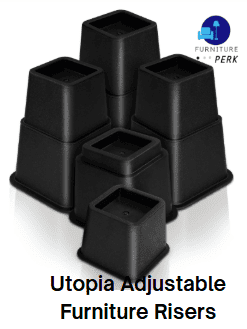
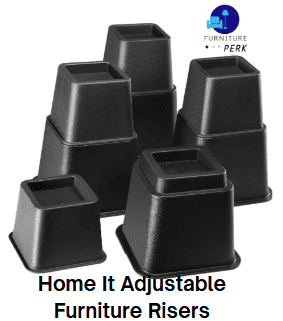
#2 Home-it Adjustable Furniture Riser- lifts in Heights of 8, 5 or 3 Inches Heavy Duty Set of 4 risers

Tips for Using a Couch Riser
There are a few things to consider while putting a couch on risers.
- Will the risers be stable enough to support the couch?
First and foremost, make sure that your furniture is level. If your couch or sofa isn’t leveled properly, the risers won’t work as intended and may cause instability in the piece.
- Will the couch be too high off the ground?
Make sure to consider the height of your current couch and how much added height you need.
The stability of the risers is important to consider when putting a couch on them. The couch could be too high off the ground and become unstable. The risers could also be unstable and cause the couch to fall over.
Too much height can lead to challenges getting in and out of the chair or bed.
Finally, test out the risers on your couch to see if they fit properly and are comfortable to sit on.
- What kind of couch is it?
The type of couch is also important to consider when putting it on risers. A heavier couch may be too much for the risers to support. A lighter couch may be easier to put on risers, but it may not be as stable.
Before you buy them, make sure to measure the height of the furniture and purchase a riser that is big enough to fit the furniture. Finally, make sure to install risers by following these tips: attaching with screws and bolts, marking where legs go on both sides, and drilling pilot holes into wood floors.
Potential Risks of Using Couch Risers
Couch risers are mostly fine in my experience, but I won’t pretend they’re perfect either. Most issues show up when the size or weight just isn’t matched properly, or when people assume any set will work under any couch.
- Reduced Stability
A raised couch can feel a bit different under you. Not always in a bad way, but you notice it. If the risers aren’t sitting flat or they’re a bit too tall for the setup, you might get a slight wobble when someone drops onto the couch or shifts around.
- Sliding on Hard Floors
This one really depends on the floor and the risers. On tile or wood floors, I’ve seen some sets slide a little if they don’t have proper grip underneath. It’s not every product, but it’s definitely something you only notice after it happens once.
- Uneven Weight Distribution
This usually comes down to fit. If the couch legs don’t sit properly inside the risers, the weight doesn’t spread evenly. At first it might not feel like much, but over time the couch can start to feel a bit off or less steady in certain spots.
- Tipping Concerns
To be fair, this isn’t something you run into with normal setups. But if someone goes for very tall risers on a light couch, it can start to feel top-heavy. The higher you go, the more you need to think about balance instead of just height.
Best Types of Couches for Risers
From what I’ve noticed, couch risers just work better on simple, standard furniture. The kind with proper legs, sitting evenly on the floor. If your couch already feels stable on its own, chances are it’ll handle risers without much trouble.
They usually fit fine with things like:
- Standard sofas
- Loveseats
- Sectional sofas (as long as each section actually has solid legs)
- Sleeper sofas
- Accent chairs
In these setups, things are pretty straightforward. The legs sit in the risers, you place the weight, and most of the time it just… works.
But not every couch plays nice with them. Some are just harder to predict:
- Reclining sofas (the moving parts mess with balance)
- Power recliners
- Sofas that sit on a flat base instead of legs
- Furniture with weird or curved legs that don’t really sit properly in the cup
With these, it’s less about strength and more about how everything fits together. If the leg doesn’t sit right, you feel it immediately when you sit down—it never quite feels steady, even if it technically holds.
So yeah, it’s not a strict rule list. It really comes down to how the couch is built.
Simple legs = usually fine.
Anything with movement or unusual bases = you start getting into “maybe, maybe not” territory.
How to Install Couch Risers (Based on My Experience)
Installing couch risers looks like one of those quick “5-minute fixes” online. It’s not that simple once you’re actually standing in the room trying to lift a real couch.
The first thing I did was just check if the legs even fit the risers properly. Sounds obvious, but it matters more than you’d expect. If it doesn’t sit right in the cup, you’ll feel that tiny wobble later every time you sit down.
I also learned pretty fast that weight ratings aren’t just numbers on a box. At first, I didn’t think much about it, but now I always pick risers that feel a bit stronger than what I actually need. It’s just less stress in the long run.
Lifting the couch was the part I underestimated the most. I thought I could manage alone, but no—had to call someone in. We just lifted one side at a time and slid the risers underneath. Nothing fancy, just awkward and a bit heavier than expected.
Getting the legs lined up properly took a couple tries. One corner didn’t sit right the first time, so we adjusted it until it felt centered. You kind of know when it’s right—the couch just stops feeling uncertain and sits properly.
After that, I didn’t trust it immediately. I sat down slowly, shifted my weight, even leaned a bit harder on one side just to see if anything moved. When nothing shifted, I left it alone.
Mistakes I’d avoid next time
A few things I either did wrong or saw clearly after the fact:
- using risers that aren’t really strong enough for the couch
- putting them on slightly uneven floors and hoping for the best
- going for extra height just because it looked convenient
- not checking the actual shape of the couch legs before buying
- picking the cheapest set and expecting it to feel stable
None of this is complicated, but it’s the kind of thing you only notice when you sit down later and something feels a bit “off.”
What are Some Other Ways to Add Height to My Couch?
Adding risers under the foot of your couch is not the only way to raise it off the floor. Fortunately, there are many other options to choose from.
In the following section, I’ll explain different methods that you can use instead of set of furniture risers. Consider which works best for your furniture and you.
- Replace the Seat Cushions
Depending on the design and state of your couch, you can replace its seat cushions with higher ones. It’ll not only make the seating surface higher but also give your couch a fresh new look.
If your couch design allows replaceable seat cushions, you can buy cushions with extra height and replace the old ones. You can buy foam that is suitable for making seat cushions and customize it to fit your couch. In this case, chances are that your old cushion cover won’t accommodate the added cushions. So, you may need to put a slipcover over the couch

2. Add More Cushions to your existing ones
If your existing couch design doesn’t allow for replacing the cushions, you can add more cushions to give the seat a raised height. Buy the seat cushions and put them on top of the existing cushions for added height.
3. Fit a Thick Piece of Foam below the Couch Cushion
It is one of the simplest ways to boost the height of your couch. You can place a thick piece of foam below the cushion. Measure the top cushions of your couch, get the foam with the desired thickness, and cut the foam in the same shape. Then place it under the top cushion of your couch. It’s that simple!
On the negatives, it won’t look nice to have an exposed foam under the top cushions of your sofa/ couch.
However, you can use a complementary color cover for the foam or put a slipcover over your sofa.
4. Caster Wheels
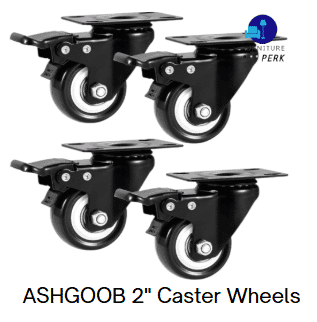
If you’re looking for a way to add height to your couches and make it easy to move at the same time, then caster wheels are the best option for you. This accessory will not only make your heavy furniture easier to move around to clean below it, but also add a touch of modernity to your sofa.
Most of the caster wheels come equipped with a pre-drilled base that accepts a wide range of bolts and screws. So you can easily attach them to your couch base.
To prevent unnecessary rolling, you can rest the back of your couch against a wall. It’s also great to place your couch with caster wheels on non-slip rug pad or floor mat.
My suggestion is to go for a brake wheel type caster that will prevent rolling away while you lean against it while sitting down.
When fitting the castor wheels to your couch, it is an excellent idea to fit the braked wheel type to ensure the couch doesn’t roll away if someone leans against it while sitting down. This option would work even better if the back of the couch rested up against a wall.
Raising your couch height to match other seating is especially useful when you need the couch to be mobile and double as seating at a dining room table, etc. A couch fitted with castor wheels is easy and convenient to move around.
Castor wheels will add a touch of modernity to your sofa, and it will also be a lot easier to move around to clean below it.
5. Fit Longer Legs
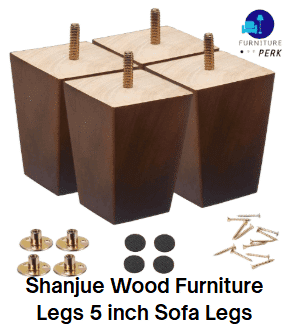
If your furniture or couch design allows, you can replace its legs with longer ones to get your desired height.
Some couches or sofas have a removable leg design for easy transport. So, you can easily replace the short legs with replacement couch legs.
Conveniently, replacement legs are available in different sizes and shapes. Determine how much taller you like your couch to be. Also, check the installation process of the new legs.
6. Place Your Couch on Blocks
Place your furniture’s feet on the concrete blocks or stone pavers. Although it won’t look attractive, it works perfectly. Make sure all the blocks are uniform in size and shape. You can also paint or decorate the blocks to make them attractive. My suggestion is to paint them to match the color of your couch legs.
Placing blocks or pavers directly on the tiles or hardwood floors may scratch the surface. So, you need to ensure to add some padding, such as a felt pad, between the blocks or pavers and floors to prevent scratches.
7. Make Your Own Couch Risers- DIY risers
When it comes to DIY risers, there are several ways that you can give it a try. Let me explain some of those methods.
- Build a Boxed Base for Your Couch
If you need a very strong and sturdy platform to add height of more than five inches, building a box-shaped base is a good idea. Placing your couch on the base not only adds height to it but also gives you a home theater feel.
The added benefit of such box shaped platform is that you can use the space as a storage space to organize your living space and keep things neat.
- Build Removable Sled Base
It’s another simple DIY method to make your own couch risers. If your couch gets moved around a lot, it is a sturdy solution. Sled base is a simple framework of strips of wood that fit to run horizontally from the front feet to the back feet of the couch.
Measure the distance between the couch’s front and back feet. Add a couple of inches to this measurement. Cut the strips of wood or plywood to length according to this measurement.
If you like to add more height, add more pieces of plywood to the stack and use strong wood glue between each layer to ensure a strong bond.
Make an identical sled base or stack for each end of your couch. When done, lift each end of your furniture into the stack or sled base.
Frequently Asked Questions about Couch Risers
Don’t miss the following FAQs section!
1. Is there any drawback to using a furniture riser?
There is no significant disadvantages to using this block. However, the main issue is that they will be visible. Of course, using a slipcover or furniture cover that extends to the ground will hide the risers. If you decide to use a slipcover on your furniture, make sure you buy a cover that is long enough to cover the risers.
2. How long will it take for the risers to wear out?
It is difficult to say for certain how long risers will last, as this will depend on a number of factors such as the frequency of use, and the material used. However, most risers can last for years under normal use.
3. Should I replace the risers every time I move my couch?
There is no need to replace the risers every time you move your couch. Risers are usually made of a durable material and will last longer.
4. Is it safe to put a couch on risers?
As long as you buy the high-quality and right-sized risers to hold your furniture legs, it is safe to use. Of course, it’s also important to add these blocks properly, and the floor needs to be flat to prevent wobbling or tilting.
5. Do I need to buy any special tools or equipment to put a couch on risers?
No, you don’t need to purchase any special tools or equipment to put a couch on risers.
Conclusion
So, can you put a couch on risers?
I hope that after reading this blog, you have a clear idea of it.
To sum it up, the height adjustments can turn your couch into a fancy yet functional piece of furniture.
The secret lies in creating levels with different heights, depending on how tall or short you want to sit on the couch or sofa without compromising your comfort level!
If you have some tips of your own to share about putting a couch on risers, share with us in the comments section below!